
Tirzepatide Side Effects: What's Common, What's Serious, What Helps
This guide explains tirzepatide side effects in plain language. Tirzepatide is a once-weekly injectable medication that acts on two gut hormone pathways, GLP-1 and GIP. Most of its side effects are stomach-related and temporary. A few are serious and worth knowing before the first dose, not after.
A note on sources: the detail below comes from the labeling of the FDA-approved tirzepatide product and from what's known about the drug. Compounded tirzepatide, which is what we prescribe at Nu Image®, isn't FDA-approved, so don't assume your experience will match the labeling exactly.
The common ones
The approved labeling lists these as the most commonly reported side effects:
- Nausea
- Diarrhea
- Vomiting
- Constipation
- Stomach pain and indigestion
- Burping and acid reflux
- Injection-site reactions such as redness or itching
- Tiredness
- Hair loss
- Hypersensitivity reactions
Gastrointestinal effects tend to cluster around the start of treatment and each dose increase. Not everyone gets all of them, and some people get none. Many people find nausea is worst for a day or two after a dose and eases as the week goes on.
What tends to help
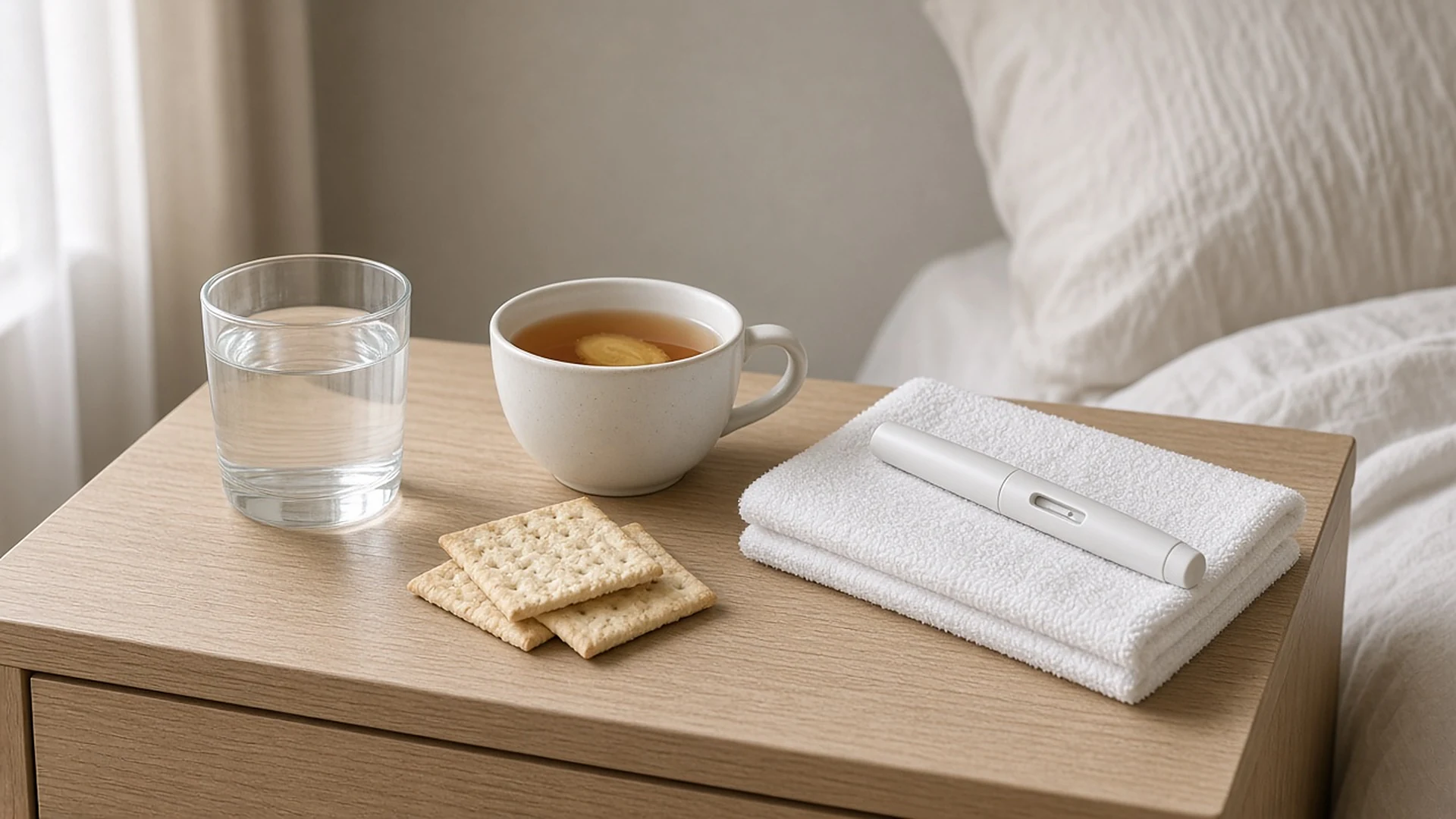
Nausea. Eat slowly and stop at "comfortable," not "full." Smaller portions, a bit more often. Skip heavy or fried food right after your dose. Ginger, plain crackers and cold foods often sit better than hot ones. If nausea is bad, tell your provider before the next increase. Waiting at the same dose is a normal move.
Constipation. Fluids first, then fiber, added gradually. A daily walk helps more than people expect. If several days pass without a bowel movement, ask your provider what's reasonable to take rather than starting a laxative routine on your own.
Diarrhea or vomiting. Sip fluids and watch for dehydration: dark urine, dizziness, a very dry mouth. Dehydration can strain the kidneys, so call if it keeps going.
Reflux. Smaller, earlier dinners, and stay upright for a few hours afterward.
Injection sites. Rotate between the abdomen, thigh and upper arm, and don't use the exact same spot two weeks in a row. Follow the instructions that came with your product.
Hair shedding. Hair loss is listed in the labeling, and fast weight loss on its own can trigger temporary shedding. Mention it to your provider so other causes, such as low iron or a thyroid problem, can be checked.
The serious ones
These are less common, and they're a big part of why a licensed provider reviews your history before prescribing. Call your provider right away, or seek emergency care, if you have:
- Severe stomach pain that doesn't let up, sometimes reaching your back, with or without vomiting. This can be pancreatitis.
- Pain in the upper right abdomen, fever, or yellowing of the skin or eyes. This can point to a gallbladder problem.
- Vomiting or diarrhea that leaves you dizzy or unable to keep fluids down.
- Swelling of the face, lips, tongue or throat, a widespread rash, or trouble breathing, which can signal a serious allergic reaction.
- A lump or swelling in your neck, hoarseness, or trouble swallowing.
- Vision changes, if you have diabetes.
- Shakiness, sweating or confusion, especially if you also take insulin or a sulfonylurea. This can mean low blood sugar.
The approved labeling carries a boxed warning about thyroid C-cell tumors, based on studies in rodents. It's not known whether tirzepatide causes them in people. It's contraindicated for anyone with a personal or family history of medullary thyroid carcinoma or with MEN 2, which is why providers ask about both.
Who should talk to a provider before starting
Tell your provider if you've had pancreatitis, gallbladder disease, kidney problems, severe stomach or digestive disease including slow stomach emptying, or diabetic eye disease. Tell them if you're pregnant, planning to become pregnant or breastfeeding, and about every medication and supplement you take.
Two practical points from the approved labeling. First, tirzepatide can reduce how well birth control pills work, and the label advises switching to a non-oral method or adding a barrier method for four weeks after starting and for four weeks after each dose increase. Second, it slows stomach emptying, which matters for anesthesia or deep sedation, so tell anyone planning a procedure that you take it.
What this article can't tell you
This is a general overview, not a complete list. A licensed provider evaluates every patient, and the product page for each medication carries the labeling and safety information. Because compounded medications haven't been reviewed by FDA, report anything unexpected to your provider, even if it seems minor. You can also report serious problems to FDA's MedWatch program.
Related reading
- Compounded tirzepatide
- GLP-1 Side Effects by Body System: What Is Common and What Needs Care
- Semaglutide vs Tirzepatide Side Effects: What Is Shared and What Differs
- Does Semaglutide Cause Hair Loss?
- How Long Does It Take for Semaglutide to Work? The First 12 Weeks
- Compounded Semaglutide and Tirzepatide: What It Actually Means
Frequently asked questions
What are the most common tirzepatide side effects?
Nausea, diarrhea, vomiting, constipation, stomach pain and indigestion are the most commonly reported. They're usually most noticeable when you start and when the dose goes up.
How long do tirzepatide side effects last?
Often a day or two after a dose, easing as your body adjusts. If they don't ease, or they're severe, tell your provider.
Does tirzepatide cause hair loss?
Hair loss is listed in the labeling, and rapid weight loss can cause temporary shedding on its own. Mention it to your provider so other causes get checked.
Where should I inject tirzepatide?
The abdomen, thigh or upper arm, rotating the spot each week. Follow the instructions that came with your prescription.
Can I take tirzepatide if I'm on birth control pills?
The labeling for the approved product advises a non-oral or backup method for four weeks after starting and after each dose increase. Ask your provider what applies to you.
Is it okay to take tirzepatide with other medications?
That depends on the medication. Insulin and sulfonylureas can raise the risk of low blood sugar, and oral medicines may be absorbed differently because stomach emptying slows. Share your complete list with your provider.
When should I go to the emergency room?
For severe, lasting abdominal pain, signs of a serious allergic reaction such as facial swelling or trouble breathing, or dehydration you can't manage at home.
Sources
- FDA-approved prescribing information for tirzepatide (boxed warning, warnings and precautions, adverse reactions, drug interactions, contraception), DailyMed
- Jastreboff AM, et al. Tirzepatide Once Weekly for the Treatment of Obesity. N Engl J Med. 2022;387:205-216. PMID 35658024
- FDA, FDA's Concerns with Unapproved GLP-1 Drugs Used for Weight Loss
- NIDDK, Prescription Medications to Treat Overweight & Obesity
Compounded medications are not FDA-approved. Prescription required; a licensed provider determines whether treatment is appropriate.
Last reviewed October 27, 2026. Reviewed by Victor Cruz, MD.
This article is for informational purposes only and does not constitute medical advice. The information contained herein is not a substitute for and should never be relied upon for professional medical advice. Always talk to your physician about the risks and benefits of any treatment. Nu Image® may not offer the medications or services mentioned in this article.