
NAD+ vs NMN: How They Differ and How Each Is Regulated
NAD+ vs NMN is a common point of confusion. NMN and NAD+ get lumped together online, which causes a lot of confusion. They're related, but they aren't the same thing, and they're sold and regulated differently.
How they're related
NAD+ is a molecule every cell uses in energy metabolism. NMN (nicotinamide mononucleotide) is one of the building blocks your cells can use to make it. Nicotinamide riboside (NR) is another. These building blocks are called precursors.
So the short version: NMN is an ingredient the body can convert toward NAD+. NAD+ is the end product.
How they're taken
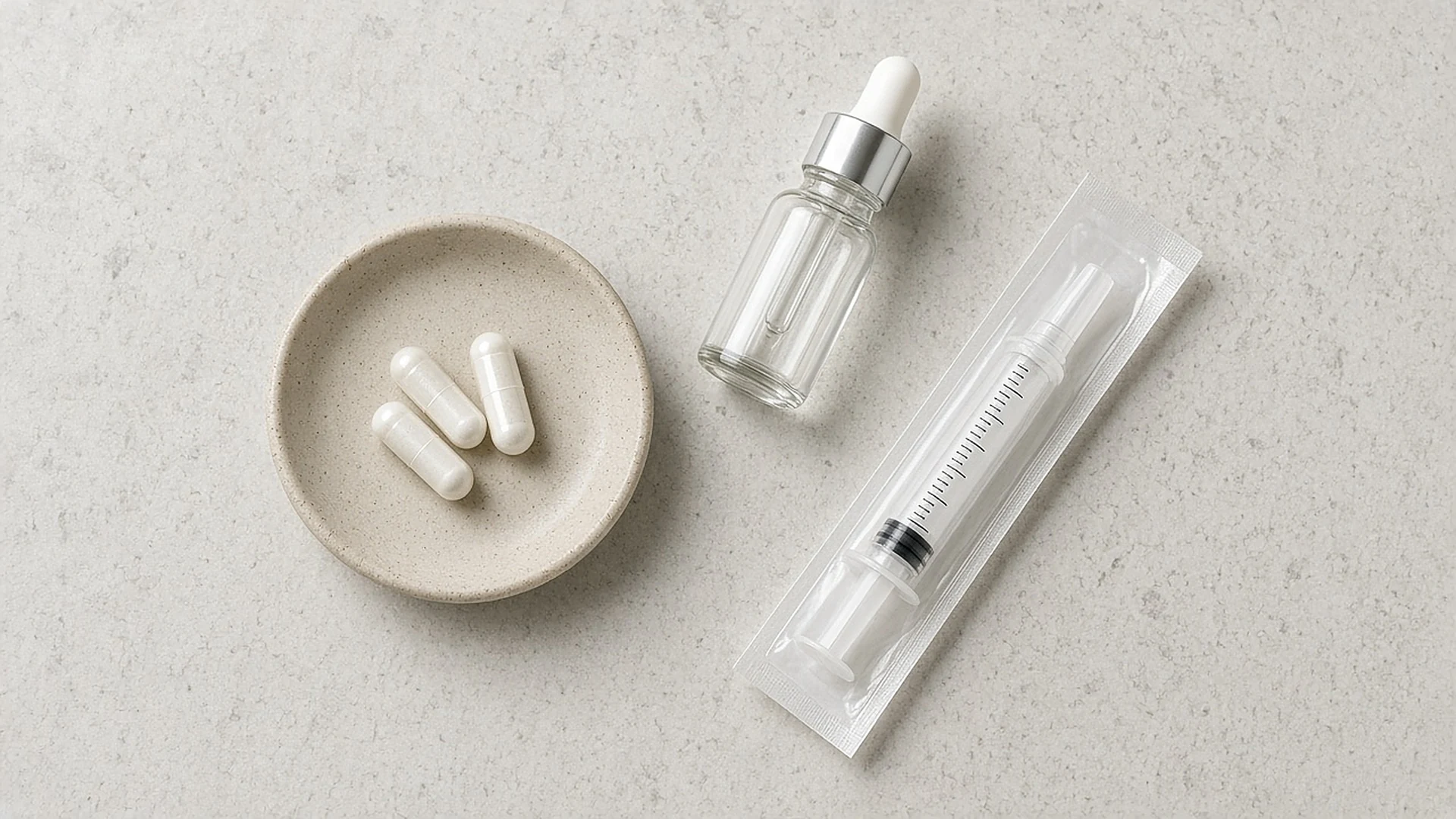
NMN is sold mainly as an oral supplement, in capsules or powders. NAD+ as a prescription product is given by injection. Oral and injected products go through the body differently, and nobody should assume the two do the same thing.
What the human studies cover
The best-known human trials in this area looked at oral precursors:
- A 2018 trial found that oral NR raised blood NAD+ levels in healthy middle-aged and older adults and was well tolerated in that study.
- A 2021 trial in postmenopausal women with prediabetes found a change in how muscle responded to insulin after oral NMN. It was small and measured one specific outcome.
Neither study tested injected NAD+, and neither shows that any product improves how people feel day to day. Raising a lab number isn't the same as improving health, and reviews of the field say so.
How they're regulated
This is where it gets messy. In late September 2025, FDA responded to citizen petitions about NMN and stated that NMN is not excluded from the legal definition of a dietary supplement. Supplements aren't approved by FDA before they're sold. The company making them is responsible for evaluating safety and labeling, and FDA acts on problems after products are on the market.
Compounded NAD+ is a different category. It's a prescription medication prepared by a licensed pharmacy, and compounded drugs aren't FDA-approved. FDA doesn't verify their safety, effectiveness or quality before marketing. The regulatory status of any ingredient can change, so check the current rules rather than relying on an old article, including this one.
What to watch for in marketing
Be skeptical of any page, ours included, that treats NAD+ or NMN as a sure route to more energy, better aging or "cellular repair." Those phrases describe lab biology, not outcomes you can count on. A trustworthy source tells you what was studied, in whom, for how long, and what wasn't measured. If you can't find that, assume it doesn't exist.
Choosing between them
We're not going to tell you one is better, because the research doesn't support ranking them. Practical differences are easier to talk about:
- Route. Capsules or powder versus an injection you give yourself.
- Oversight. A supplement doesn't require a prescription. A compounded injection does, and a licensed provider reviews your history first.
- Quality questions. For supplements, look at independent testing. For compounded products, ask which licensed pharmacy prepares it.
- Interactions and conditions. Either one deserves a conversation with a clinician if you're pregnant, breastfeeding, managing a chronic condition or taking other medications.
At Nu Image®, we offer NAD+ as a prescription injection after a provider evaluation. We don't sell NMN.
Related reading
- NAD+
- NAD+ Injections: What They Are and What the Research Supports
- NAD+ Injection Side Effects and Who Should Be Cautious
Frequently asked questions
Is NMN the same as NAD+?
No. NMN is a precursor your cells can use to make NAD+. NAD+ is the molecule itself.
Is NMN legal to sell as a supplement?
In September 2025 FDA stated that NMN is not excluded from the definition of a dietary supplement. Companies still have to meet the rules that apply to supplements, and policies can change.
Is an NAD+ injection stronger than NMN capsules?
That hasn't been shown. They're different products taken by different routes, and the studies we cite tested oral precursors, not injections.
Can I take both?
Ask a provider who knows your history and medications. We don't have research on combining them.
Is compounded NAD+ FDA-approved?
No. Compounded medications aren't FDA-approved.
Sources
- Covarrubias AJ, et al. NAD+ metabolism and its roles in cellular processes during ageing. Nat Rev Mol Cell Biol. 2021;22(2):119-141.
- Martens CR, et al. Chronic nicotinamide riboside supplementation is well-tolerated and raises NAD+ in healthy middle-aged and older adults. Nat Commun. 2018;9:1286.
- Yoshino M, et al. Nicotinamide mononucleotide increases muscle insulin sensitivity in prediabetic women. Science. 2021;372(6547):1224-1229.
- FDA, response to citizen petition on beta-nicotinamide mononucleotide (NMN), Docket FDA-2023-P-0872, September 29, 2025
- FDA, Dietary Supplements
- FDA, Compounding and the FDA: Questions and Answers
Compounded medications are not FDA-approved. Prescription required; a licensed provider determines whether treatment is appropriate.
Last reviewed October 27, 2026. Reviewed by Constance Tambakis-Odom, MD.
This article is for informational purposes only and does not constitute medical advice. The information contained herein is not a substitute for and should never be relied upon for professional medical advice. Always talk to your physician about the risks and benefits of any treatment. Nu Image® may not offer the medications or services mentioned in this article.