
HPG Axis Recovery After Anabolic Steroid Use: What Happens and How Long It Can Take
If you used anabolic steroids and you feel flat, tired or unlike yourself since stopping, the HPG axis is probably what your doctor will talk about first. HPG axis recovery after anabolic steroid use is possible for many men, but it isn't quick, it isn't guaranteed, and it deserves a proper evaluation instead of guesswork.
There's no judgment here. Plenty of people who used steroids are now trying to get healthy, protect fertility or simply feel normal again. This article explains what the axis is, what steroids do to it, and what a careful recovery plan looks at.
What the HPG axis is
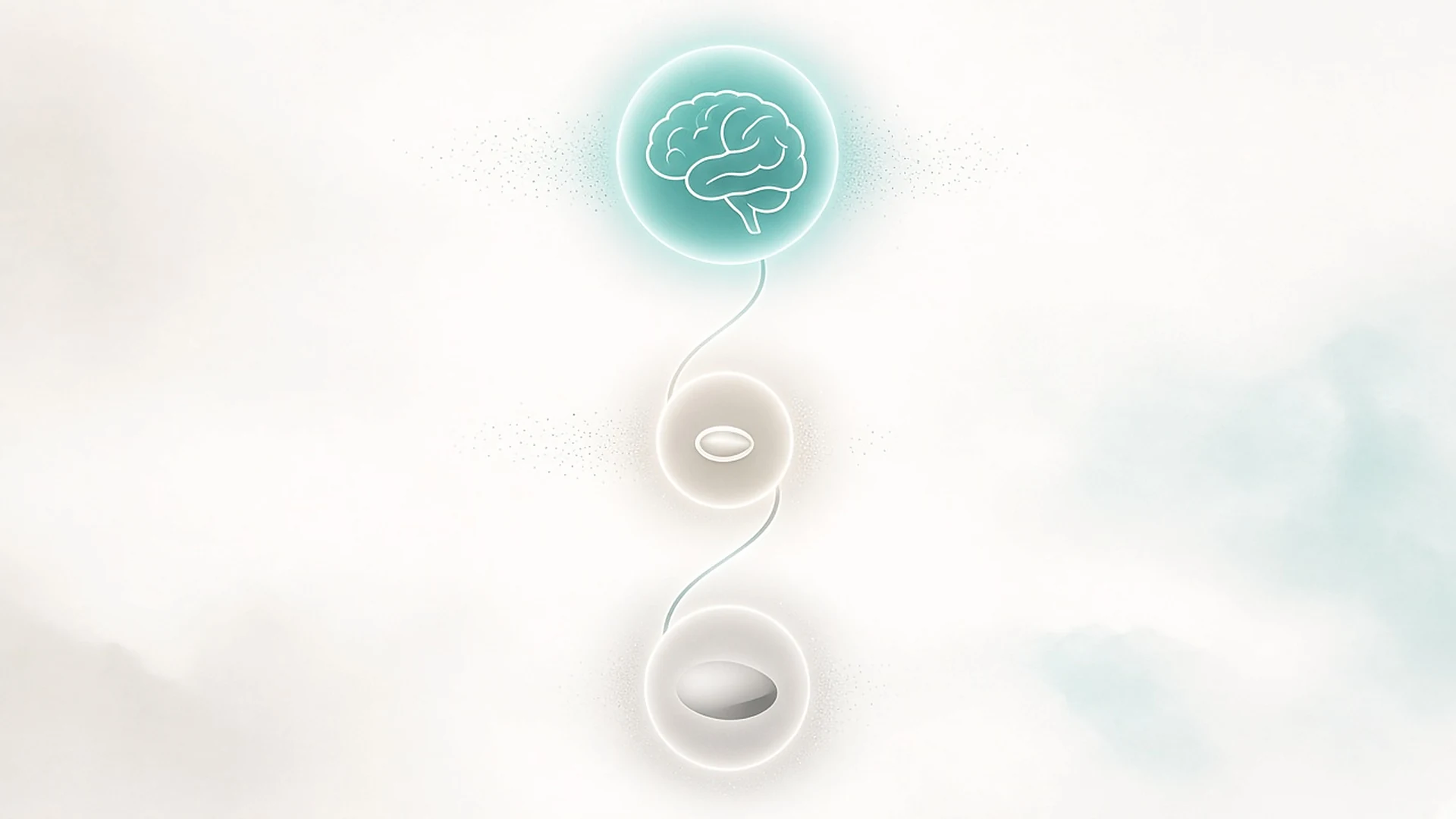
HPG stands for hypothalamic-pituitary-gonadal. It's the signaling chain that tells the testes to make testosterone and sperm. The hypothalamus in the brain sends a signal, the pituitary gland responds by releasing two hormones, luteinizing hormone (LH) and follicle-stimulating hormone (FSH), and the testes respond to those two hormones. MedlinePlus describes LH as the hormone that triggers testosterone production in men, and FSH as one of the hormones involved in sperm production.
The chain works like a thermostat. When testosterone in the blood is high enough, the brain turns its signals down. When it's low, the brain turns them up.
How anabolic steroids suppress it
Anabolic steroids, whether testosterone or related compounds, raise androgen levels from outside the body. The brain reads that as "plenty," so it quiets LH and FSH. Without those signals the testes slow down, produce less of their own testosterone and sperm, and can shrink. NIDA notes that steroid use can cause the testicles to shrink and lower sperm count, among other effects.
When the outside supply stops, the brain isn't automatically ready to restart. That gap, a body that has stopped its own production and hasn't yet resumed, is what causes steroid withdrawal symptoms such as low energy, low mood, low sex drive and trouble with erections.
What recovery can look like
The honest answer is that it varies a lot. Reviewing the published evidence, researchers found that anabolic steroid-induced hypogonadism may persist for months or even years after the last use, and that in some cases it may be only partly reversible. One systematic review found that among cases with fully known outcomes, complete recovery of the axis was uncommon. Those reports are mostly case series, so they likely overstate how often problems persist. They do show why recovery shouldn't be assumed.
What tends to matter, according to published reviews:
- The dose and type of steroid used
- How long and how many cycles
- Age and baseline health, including fertility history
- Whether other medications or conditions are involved
A survey of endocrinologists found that most simply advise waiting for natural recovery, while a smaller share prescribe medication to stimulate it. In other words, even specialists don't follow a single standard approach.
Labs that show where things stand
A provider usually starts with a morning total testosterone drawn on two separate days, plus LH and FSH. The pattern is informative. Low testosterone with low or low-normal LH and FSH suggests the brain's signal is still quiet, which is called secondary hypogonadism. Low testosterone with high LH and FSH suggests the testes themselves aren't responding. Other labs often added include estradiol, prolactin, hematocrit and, if fertility matters, a semen analysis.
Timing matters too. Testing too soon after stopping can show suppression that is simply expected, so a provider will often repeat labs over weeks to months before drawing conclusions.
What clinicians may discuss
Treatment depends on the findings and on your goals. Published reviews describe a range that includes watchful waiting, medications that act on the pituitary signal, and, in some men, testosterone replacement. Replacement can further suppress the axis and the sperm count, so it's weighed carefully for men who want to preserve fertility. Enclomiphene is one of the medications discussed for secondary hypogonadism. It isn't FDA-approved, and whether it fits your situation is a decision for a licensed provider after an evaluation.
When to see a provider
See a provider if symptoms continue after you've stopped, if you feel persistently depressed or have thoughts of harming yourself, or if you want to start a family. Low mood after stopping steroids can be severe. If you're in crisis, call or text 988 in the U.S. right away.
A licensed provider evaluates every patient, and product pages carry labeling and safety information for each medication.
Related reading
- Enclomiphene
- Bloodwork
- Low testosterone symptoms and how a lab workup works
- Testosterone Recovery After Steroid Use: Labs and Timeline
- Enclomiphene for Secondary Hypogonadism and Fertility Preservation
Frequently asked questions
What is the HPG axis?
It's the hypothalamic-pituitary-gonadal axis, the chain of signals from the brain to the testes that controls testosterone and sperm production. LH and FSH are the two pituitary hormones that carry the message.
How long does HPG axis recovery take after steroids?
There's no fixed answer. Published reviews describe suppression that can last months or even years, and in some men recovery is partial. A provider tracks labs over time instead of relying on a calendar.
Will my natural testosterone come back on its own?
For some men it does, and many doctors start by waiting and rechecking labs. For others it stays low and treatment is discussed. Only repeat labs and an evaluation can show which group you're in.
Which labs check the HPG axis?
Morning total testosterone on two days, LH and FSH, often estradiol, prolactin and hematocrit, and a semen analysis if fertility is a goal.
Is enclomiphene approved by FDA for this?
No. Enclomiphene is not FDA-approved for any use. It is compounded and prescribed only after a licensed provider has evaluated you.
Should I talk to a provider if I feel depressed after stopping steroids?
Yes, as soon as you can. Low mood is a recognized part of steroid withdrawal and can be serious. In the U.S., call or text 988 if you're in crisis.
Sources
- NIDA, Anabolic Steroids DrugFacts
- Rahnema CD, et al. Anabolic steroid-induced hypogonadism: diagnosis and treatment. Fertil Steril. 2014;101(5):1271-1279. PMID 24636400
- Vilar Neto JO, et al. Anabolic androgenic steroid-induced hypogonadism, a reversible condition in male individuals? A systematic review. Andrologia. 2021;53(7):e14062. PMID 33887077
- Pope HG Jr, Kanayama G. Body image disorders and anabolic steroid withdrawal hypogonadism in men. Endocrinol Metab Clin North Am. 2022;51(1):205-216. PMID 35216717
- Grant B, et al. Survey of endocrinologists managing recovery from anabolic androgenic steroid induced hypogonadism. Reprod Fertil. 2023;4(1):e220097. PMID 36757334
- MedlinePlus, Luteinizing Hormone (LH) Levels Test
- MedlinePlus, Follicle-Stimulating Hormone (FSH) Levels Test
Enclomiphene is a compounded medication and is not FDA-approved. Prescription required; a licensed provider determines whether treatment is appropriate. This article is educational and is not medical advice.
Last reviewed October 27, 2026. Reviewed by Constance Tambakis-Odom, MD.
This article is for informational purposes only and does not constitute medical advice. The information contained herein is not a substitute for and should never be relied upon for professional medical advice. Always talk to your physician about the risks and benefits of any treatment. Nu Image® may not offer the medications or services mentioned in this article.